

When you are upgrading a conservatory, you will come across various terms that talk about how well a material conducts heat regardless of its thickness (K-value) and how well an entire structure or assembly retains heat (U-value). You may also see R-value, which is how well a material resists heat flow, but U-value is the most important when looking at replacement conservatory roofs and their efficiency.
This article takes a look at the differences and why they are important for your replacement conservatory roof and your conservatory. If you are looking for a replacement conservatory roof in Cramlington, get in touch with our team today.
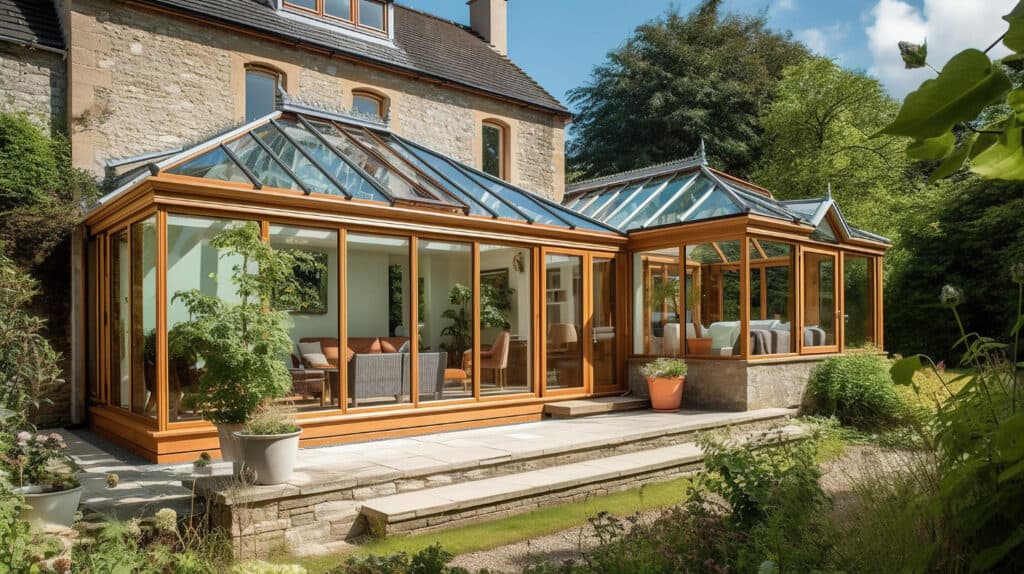
The Difference At A Glance
U-values and K-values are important values when looking at overall conservatory efficiency. U-value is most important because it looks at the whole structure, so the whole conservatory roof and the roof that you are replacing rather than just individual elements.
| Feature | K-Value (Thermal Conductivity, λ) | U-Value (Thermal Transmittance) |
| What it measures | How well a single material conducts heat, independent of thickness. | How well a whole assembly (the finished roof, window, or wall build-up) retains heat. |
| Applies to | One material in isolation (e.g., PIR foam, glass, aluminium). | The complete construction, all layers, air gaps, frames, and fixings combined. |
| Units | W/mK (watts per metre-kelvin). | W/m²K (watts per square metre-kelvin). |
| Also called | Lambda value (λ), thermal conductivity. | Thermal transmittance. |
| Lower = better? | Yes, lower k means the material itself is a poorer heat conductor (better insulator). | Yes, lower U means the finished element loses heat more slowly. |
| Accounts for thickness? | No, it’s a fixed material property per metre. | Yes, thickness, layering, and construction method all factor in. |
| Relationship | R-value (resistance) of a layer = thickness/k-value | U-value = 1 / (sum of all layer R-values + surface resistances). |
| Used to compare | Raw insulation materials against each other. | Complete roof systems, windows, or walls against each other and against Building Regs. |
| Referenced in Building Regs? | Rarely quoted directly. | Yes, Part L sets legal U-value thresholds. |
| Where you’ll see it | Insulation manufacturer datasheets. | Roof system spec sheets, EPCs, planning/building control documents. |
What About R-Value With Conservatories?
R-value is a similar calculation to U-value, but it’s the opposite way around; the calculation is the same, just reversed. With R-value, you are measuring heat loss, so a conservatory with a low R-value has poor thermal performance, which makes it cold in the winter and too hot in the summer. By lowering the overall U-value of the conservatory structure (such as the roof), you increase the R-value, making the conservatory more efficient.
Building regulations define minimum and maximum U-values (0.15 W/m²K for solid/warm roofs, and generally around 1.2 to 1.4 W/m²K for side windows and doors), but this doesn’t apply to older structures because they aren’t being built again until you choose to upgrade them, so you need to consider an old conservatory’s efficiency. You should also bear in mind that standalone, unheated ground-level conservatories under 30 square meters remain exempt as of writing. Installers also do not have to retroactively test or provide a U-value rating for an old, untouched existing conservatory structure that you are leaving as-is.
Upgrading and Improving Your Efficiency
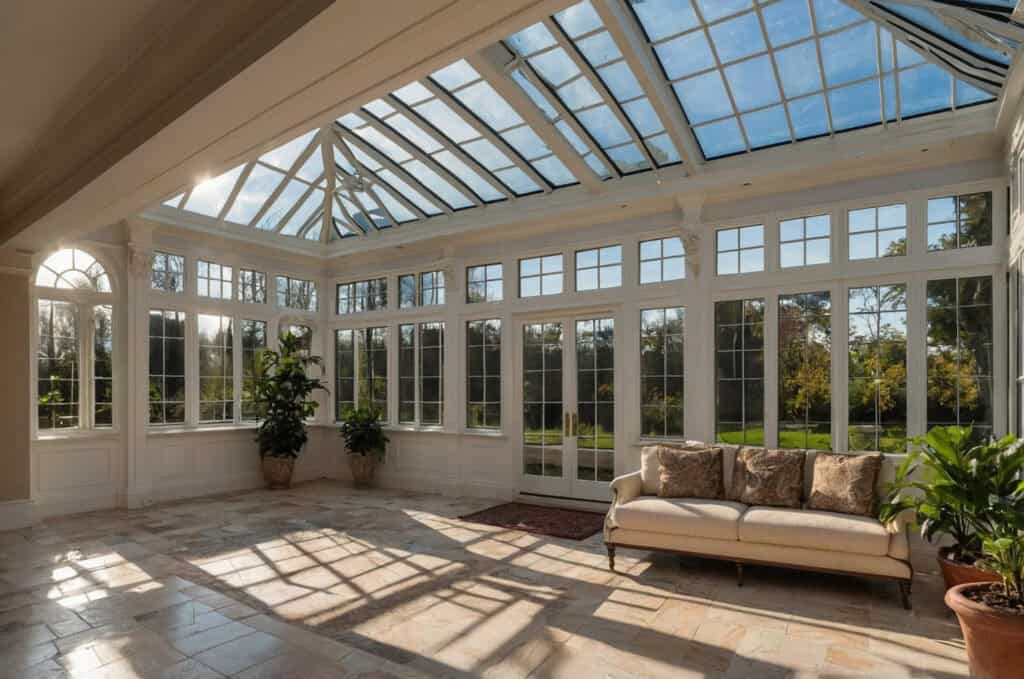
The Thermaroof replacement conservatory roof system is designed with low U-values and energy efficiency in mind. Improving your conservatory’s efficiency increases your property value and lets you enjoy the space all year round.
We can improve conservatory extensions as well as other types of conservatories, for your peace of mind. The process only takes a day or a few days, depending on the size of the conservatory.